
We live in one of the most prosperous societies the world has ever known. By many measures, we have more access, more convenience, and more opportunity than previous generations could have imagined. And yet, for all that abundance, something doesn’t feel right.
First, the benefits of that prosperity are not shared evenly—here at home or across the world. Much of what we enjoy is built on systems we rarely see, sustained by labor we rarely consider, and driven by a pace that never seems to slow down.
Scripture reminds us that this is a recurring story. In Egypt, the people of God lived under a system that required constant production. Pharaoh used loyal supervisors with whips to maintain control and ensure ever-increasing quotas were met. There was always more to make, more to build, more to prove.
And when God set the people free, one of the first gifts God gave them was the Sabbath. It was a command to stop. Not because there wasn’t work to do, but because the work would never end on its own.
And it’s past time for you and me to tune out the noise and tune into God’s rhythm.
That’s because this truth still holds. Systems like the one in ancient Egypt don’t disappear when a particular ruler is gone. They continue as long as people participate in them. And if we’re honest, many of us feel caught in something similar. There is always another task, another demand, another expectation. Even our rest can feel like an attempt to catch up rather than truly stop.
Every generation faces the temptation of Egypt. Any society that depends on endless production, widening inequality, and exhausted people begins to echo Pharaoh more than God. And if we are honest, we can hear some of those echoes in our own society.
In our own time, we are also shaped by forces that go deeper than schedules and workloads. Every day, we are being formed—by advertising, by algorithms, by a steady stream of messages telling us what we need, what we lack, and what will finally make us feel whole. These messages don’t just sell products; they train our desires.
They create noise inside the soul. They teach us to confuse wanting with living, consuming with belonging, and accumulation with peace. They quietly teach us to believe that more—more success, more comfort, more possessions—will eventually be enough. But it never is.
We were not created to be satisfied with things. At our core, we are made for connection with God, with one another, with the world around us, and within our own souls. When those connections are weakened or neglected, we don’t simply stop longing. We try to fill the gap.
We substitute consumption for communion. We reach for what is available instead of what is life-giving. Over time, that pattern can begin to look a lot like addiction—an endless cycle of reaching and never quite being filled. This is why Sabbath matters so much.
If we do not choose God’s rhythm, the world will choose our pace for us.
Sabbath is more than rest from activity; it is resistance to everything that tells us we are what we produce, what we own, or what we achieve. In a world that depends on our constant motion and constant desire, stopping becomes a quiet but powerful act of trust. It is a way of saying that our lives are not defined by the system around us, but by the God who created us.
By the time of Jesus, many people had forgotten what the Sabbath was truly for. The rhythm God created to give life had become, for some, another source of pressure and performance.
Mark tells a story about a time when Jesus and His disciples were walking through the grainfields on the Sabbath. As they go, the disciples begin to pick heads of grain. It is a simple, human moment. They are hungry, and they eat.
But the Pharisees see something else. They see a violation. According to their understanding of the law, this action counts as work, and work is forbidden on the Sabbath.
It’s important to recognize that the Pharisees are trying to be faithful. Over generations, they had built careful interpretations of the law to ensure that God’s commands were honored. In their desire to protect the Sabbath, they had surrounded it with detailed expectations. But in doing so, something essential had been lost.
Jesus responds to their concern by telling a story they would know well—the story of David, who, in a moment of need, ate the bread that was reserved for priests. It is a surprising move, but a deliberate one. Jesus meets them within their own tradition and reminds them that even within their Scriptures, human need was never meant to be ignored.
Then Jesus widens the conversation. “The Sabbath was made for the good of humankind,” He adds, “Humankind was not made for the Sabbath.”
Jesus does not dismiss the Sabbath with His response. He restores it. Jesus does not loosen Sabbath; He deepens it. He pulls it away from legalism and reconnects it to human flourishing.
The Sabbath is not a burden placed on humanity. Nor is Sabbath a test of religious performance. It is a gift. Sabbath exists for our sake. It is part of God’s design for human flourishing, a rhythm built into creation itself.
The Sabbath was made for the good of humankind. Humankind was not made for the Sabbath.
Mark 2:23–28
This is where the misunderstanding often happens. When we hear that the Sabbath was made for us, we can be tempted to treat it as optional, something to be set aside when life feels too full. But that misses the point. If Sabbath is truly made for us, then ignoring it does not make us free. It leaves us vulnerable to exhaustion, to distorted priorities, and to the relentless demands of a world that never stops.
Then Jesus says, “So the Son of Man is Lord even of the Sabbath.”
This is not simply a conclusion to the conversation; it is a declaration of authority. Jesus is not just offering an interpretation of the law; He is revealing His authority over it. He is the one who defines what Sabbath truly is, because He is the one through whom life itself is given.
If Jesus is Lord of the Sabbath, then He is also Lord of the rhythm it represents. The invitation to rest is not merely good advice; it is a call to trust. It is a reminder that we are not sustained by our constant effort, but by the grace of God.
Sabbath, then, is not about restriction. It is about restoration. It is not about what we are forbidden to do, but about what God is seeking to renew within us. In a world that constantly pulls us toward more—more work, more consumption, more striving—Sabbath draws us back to what is enough.
And in that return, we begin to remember who we are—and whose we are.
From the beginning of creation, God established a rhythm for life. There is movement and stillness, work and rest, giving and receiving. Even the natural world reflects this pattern. Hearts beat and then pause. Lungs inhale and exhale. The tides move in and out. Seasons change and return again.
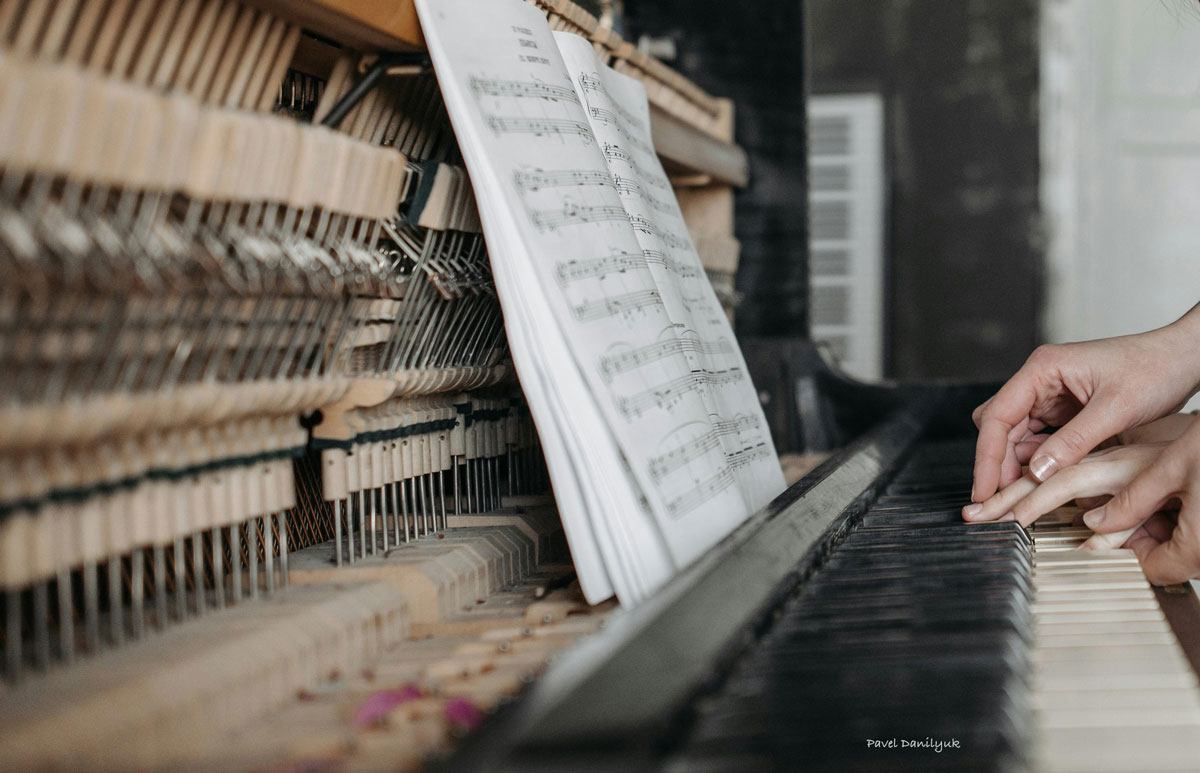
A healthy life depends on rhythm, just as music does. A symphony is not just sound; it is sound shaped into harmony, balance, movement, and rest. Without rhythm, music becomes noise.
And without Sabbath, life can become noise as well.
Much of our struggle today comes from resisting that rhythm. We have learned how to accelerate, but not how to stop. We carry devices that keep us connected to work, news, entertainment, and anxiety at every hour of the day. Even moments that once belonged to rest are filled with noise.
We hurry through meals, rush through conversations, and often treat silence as something uncomfortable rather than something holy.
In music, the rests matter as much as the notes. Without pauses, there is no beauty, no breathing room, no meaning.
Yet many of us are trying to live lives with no rest at all.
This is why Sabbath is more than physical rest. Sabbath restores rhythm to the soul. It interrupts the illusion that our value comes from constant productivity and reminds us that we are human beings, not machines. In a culture that rewards exhaustion and praises busyness, Sabbath becomes an act of resistance. It declares that our lives are not sustained by endless striving, but by the grace of God.
In The Ruthless Elimination of Hurry, John Mark Comer describes Sabbath as resistance because it interrupts the systems that train us to believe our worth comes from productivity and consumption.
This resistance is not loud or dramatic. It begins with simple practices that reconnect us to what is real. We stop working. We set aside the need to produce. We rest. We pray. We share meals. We spend time with people we love. We walk outside and pay attention to creation. We remember that the world continues even when we are not in control of it.
Sabbath also exposes the false promises we have learned to trust. The world tells us that more is always better—more money, more possessions, more success, more achievement. But our appetites cannot be satisfied by accumulation alone.
We were created for deeper things. No purchase can replace communion with God. No amount of entertainment can fully quiet the loneliness of the soul. No level of achievement can give us the peace that comes from knowing we are loved apart from what we accomplish.
When Jesus declares Himself “Lord of the Sabbath,” He is inviting us into a different way of living. He is not calling us to escape the world, but to live within it differently. Sabbath teaches us to trust that we do not have to carry everything ourselves. It teaches us to receive life as a gift rather than treat it as a race we are constantly trying to win.
Jesus Himself modeled this rhythm repeatedly. Again and again throughout the Gospels, Jesus steps away from the crowds, the demands, and even the urgent needs to pray, rest, and reconnect with the Father. If even Jesus refused to live at the pace of constant demand, perhaps we should pay attention to the rhythm He practiced. And perhaps that is one of the deepest truths of Sabbath: we can stop because God remains faithful.
The world around us is constantly asking for more. More work. More speed. More attention. More consumption. The pressure never fully disappears because the system depends on our restlessness. It depends on us believing that what we have is never quite enough and that who we are is never quite sufficient. Sabbath sings a different song.
Tune out the noise. Tune into God’s rhythm.
Sabbath reminds us that our lives are not measured by productivity. We are not valuable because we are busy. We are not loved because we succeed. Before we achieve anything at all, we are already created in the image of God and held in the care of the One who made us.
That is why Sabbath is both resistance and restoration. It resists the forces that try to reduce human beings to consumers, workers, and statistics. And it restores us to the relationships for which we were created—relationship with God, with one another, with creation, and with our own souls.
This does not mean life suddenly becomes easy. There will still be responsibilities to carry, bills to pay, and work to do. Jesus never promises a life without labor. But He does offer a different rhythm within it. A rhythm grounded not in fear and striving, but in trust.
In the end, Sabbath is not really about losing a day. It is about recovering a life.
It is about learning to stop long enough to notice what truly matters. It is about remembering that enough is not found in endless accumulation, but in the presence of God. It is about trusting that the world does not rest on our shoulders alone.
And perhaps most importantly, Sabbath reminds us that freedom is not the ability to do more and more without limits. True freedom is the ability to rest in the love and faithfulness of God.
In a world filled with noise, hurry, and endless demand, Sabbath invites us back into rhythm—the rhythm of grace, trust, worship, rest, and enough.
The world will always push us toward a faster pace. But the invitation of Jesus is different:
Tune out the noise. Tune into God’s rhythm.
You can join us each Sunday in person or online by clicking the button on our website’s homepage. Click here to watch. This button takes you to our YouTube channel. You can find more information about us on our website at FlintAsburyChurch.org.
This is a reminder that we publish a weekly newsletter called the Circuit Rider. You can request this publication by email by sending a request to FlintAsburyUMC@gmail.com, or let us know when you send a message through our website. We post an archive of past editions on our website under Connect – choose Newsletters.
Pastor Tommy
Some content comes from John Mark Comer. The Ruthless Elimination of Hurry. Colorado Springs : WaterBrook, 2019. ISBN 9780525653097.