
I’ve been thinking a lot about time lately. Less about how little of it there seems to be and more about how I seem to be held hostage by it.
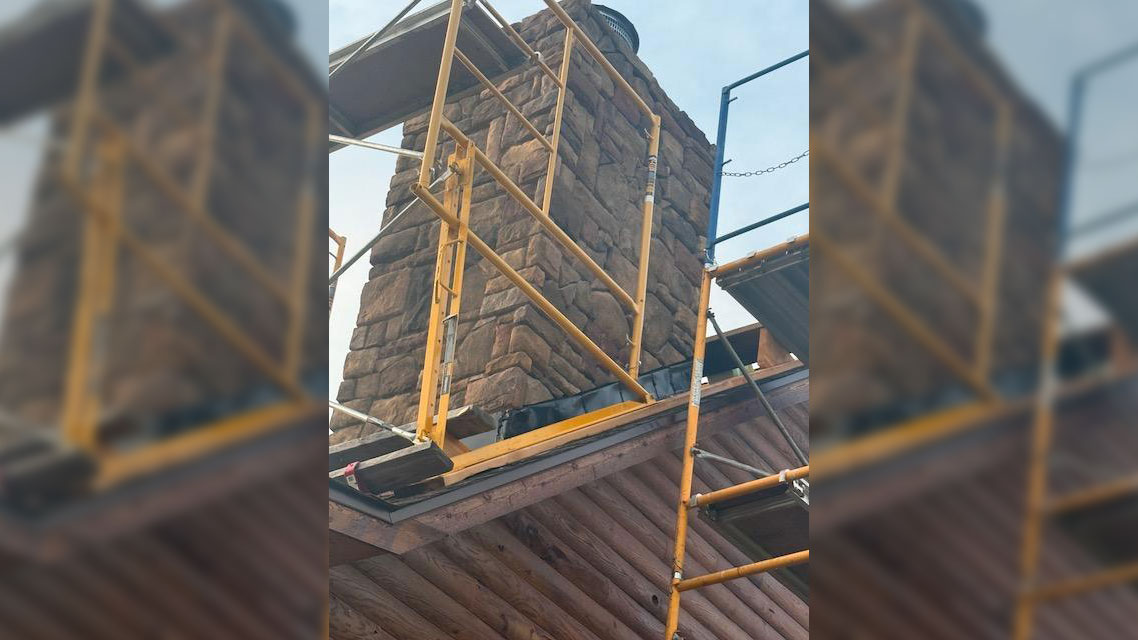
We were hoping to be moved into our new home by now. That was the plan. But building a home—really building it well—doesn’t move as fast as you think it should. There are steps you just can’t rush.
Like setting up scaffolding.
Cyndi can usually tell before I say anything. I start moving a little faster, thinking ahead to the next step before I’ve finished the one in front of me, and annoyed because I’ve misplaced a tool, again.
It’s like a broken record that’s stuck on a line that really needs to land, but just seems annoying at first. “It’s not always about time,” she says.
At first, I pushed back on that. Because it feels like it’s about time. There’s always something waiting for my attention. Another step that needs to be done.
But even as I feel that pressure, I also know—that’s not a corner I want to cut. Because this isn’t just about getting it done. It’s about doing it right and with enough patience to make sure what we’re building will last.
And that’s where her words keep coming back to me: “It’s not always about time.”
Because sometimes when I say, “There isn’t time,” what I really mean is: “I don’t want to slow down.” “I don’t want to deal with how long this will take.” “I don’t want to sit in the tension of unfinished work.”
It’s not always about time. It’s about the moment. And I don’t think that’s just true when you’re building a house. I think it’s true of the way many of us are moving through life right now.
We feel behind. We feel pressure. We feel like things are moving faster than we can keep up with. And so we rush. Not just in what we do—but in how we think…how we react…how we try to make sense of the world around us.
And it’s certainly becoming harder to make sense of the world around us.
The pace of events feels relentless. Each day brings new headlines, new claims, and new developments—often before we’ve had time to fully process what came the day before. Even for those who are paying attention, it can feel as though we are only ever seeing part of the picture.
We are told what happened, why it happened, and what it means—often all at once, and usually in ways that conflict with one another. There is always the sense that there is more beneath the surface—more context, more intention, more truth—but very little time or space to uncover it.
So we do what people have always done in moments like this. We try to piece it together the best we can. We listen. We compare. We interpret. We talk it through with others. And still, something feels off.
Some of what we hear rings true. Some of it does not. Some of it feels like a distraction from something deeper. And most of us do not have the time—or the energy—to chase every thread far enough to know the difference.
It is not simply that there is too much information. It is that we are being asked to believe competing versions of reality. We’re asked to believe what we’re told rather than what we see and feel. And over time, that begins to take a toll. Not just on our attention—but on our hope.
There is a quiet sentence that begins to surface in moments like this: We had hoped…We had hoped things would be different. We had hoped the truth would be easier to recognize. We had hoped that clarity would come.
But when everything keeps moving, and the answers remain unclear, hope doesn’t disappear—it just grows tired.
There is a line in our companion book, The Ruthless Elimination of Hurry, that captures this feeling. The author describes the sense of “tearing through each day,” so busy with life that we miss the very moments that make up a life.
And that may be the deeper problem.
Life is not something we arrive at once everything is finished. Life is what is happening right now—moment by moment, step by step. But when we are in a hurry, we don’t live those moments—we move past them. We skim. We summarize. We reduce what is happening to something manageable. And in doing so, we risk missing not just the details—but the meaning.
It’s not always about time. It’s about the moment.
And when everything comes at us this fast…we don’t just lose track of time—we lose the ability to recognize the moment we’re in.
When we think about Easter, we usually think of the empty tomb. The stone rolled away. The angel’s announcement. The first witnesses who saw and believed. And that story matters.
But Luke tells us about something else that happened that same day. Not at the tomb—but on a road. Two followers of Jesus are leaving Jerusalem. Not running toward something—walking away. Seven miles. Heading back toward the life they had before all of this began.
And as they walk…they’re doing what we’ve been talking about. They’re trying to make sense of it. And as they’re talking, Jesus comes alongside them, but they don’t recognize Him. He walks with them. Listens. And asks a simple question: “What are you talking about as you walk along?”
They stop. Look at him—almost surprised this stranger doesn’t already know. And they say, “Are you the only one who hasn’t heard?” And then they begin to tell the story of what happened, which they are trying to make sense of.
“He was a prophet,” they said, “powerful in word and deed.” They tell the stranger what happened, from what little they knew. How he was handed over to the authorities. How he was crucified.
And then they say it—the line that carries everything we’ve been feeling: “We had hoped…” We had hoped he was the one. We had hoped things would be different.
And then the story they tell gets even harder to follow. “Some of the women went to the tomb. They said it was empty. They said they saw angels. They said they saw Jesus alive.” Obviously, baffled by their own recollection of events, they continued. “Others went to check for themselves and found it just as the women said. But they did not see Jesus for themselves.”
These two followers seemed to have the information. They had heard the reports. They had put the pieces together, as best they knew how. But they don’t understand what it means.
It’s much easier for you and me to see what’s going on. After all, we’re coming from a time after it all unfolded. We can look back and say to them, “It’s not always about time. It’s about the moment.” We know that they were standing in the middle of the most important moment in history—and they don’t recognize it.
So Jesus begins to speak. Not by adding more information—but by helping them see differently. He walks them back through the rest of the story. Through Scripture. Through everything, they thought they understood.
And something begins to happen. Not all at once. Not suddenly. But slowly.
After Jesus leaves them, they will say: “Were not our hearts burning within us…while he talked with us on the road?” But even then, they still don’t recognize him. Because recognition doesn’t happen on the road.
They arrive at their destination. And Jesus acts as though he will keep going. And they say: “Stay with us.” And in that moment—everything changes. Everything begins to fall into place because they stop. They make space. They move from the road…to the table. And something happens at a table that doesn’t happen on the road. On the road, you move. You talk. You try to figure things out. But at the table, you slow down. You receive. You pay attention.
All day long, they had been sorting through information, comparing stories, and trying to make sense of everything. But none of that led to recognition. It wasn’t more information that opened their eyes. It was a shared meal.
Jesus sat down to eat with them, took the bread, and said the blessing. And when He broke the bread and gave it to them, they recognized Him.
Luke 24:13–35
Luke tells us that Jesus takes bread, blesses it, breaks it, and gives it to them. And suddenly—this isn’t just dinner. There is something familiar in His words. This is the story they’ve lived before.
And in that moment, their eyes are opened. And they realize: Jesus had been with them the whole time. Walking beside them. Listening to them. Even as they tried to make sense of everything without recognizing Him.
They didn’t miss Jesus because he wasn’t there. They missed Him because they didn’t recognize the moment they were in.
You see, it’s not always about time. It’s about the moment.
And the moment that changed everything…didn’t happen while they were hurrying down the road. It happened when they stopped and sat at the table.
So maybe the invitation of Easter isn’t just to believe that Jesus is alive. Maybe it’s this: Slow down, make space, and come to the table. Learn to recognize Him.
If it’s not always about time…if it’s about the moment, then the question becomes: How do we live differently? Because most of us don’t need to be convinced that life is moving too fast. We feel it. What we need is a way to step out of that pace—even briefly—so we can begin to see clearly again.
The good news is this: The invitation of Jesus is not complicated. It’s not another demand on your schedule. It’s not one more thing to add to an already full life. It’s an invitation to slow down—on purpose. To create small moments of space in your day where you are not reacting…not consuming…not trying to keep up…but simply present.
That might look like taking a few minutes in the morning, before the day begins, to sit in quiet. Turning off the noise in the car instead of filling every moment with sound. Choosing one conversation
where you are fully present—not distracted, not rushed. Or setting aside time to share a meal without screens, without hurry, just being there.
None of these things are dramatic. But that’s the point. Because the moment that changed everything for those two followers wasn’t dramatic either. It was a simple act. Bread. Blessing. Breaking. Sharing. And somehow—in that moment—they recognized Him.
And maybe that’s where it begins for us. Not by trying to fix everything. Not by trying to understand everything. But by learning to notice. To pay attention. To make space for moments that we would otherwise rush past.
Because Christ is not waiting for us somewhere else—somewhere calmer, somewhere clearer, somewhere easier. Christ is already present. Walking beside us. Speaking into our lives.
The question is not whether He is there. The question is whether we will slow down long enough to recognize Him.
You can join us each Sunday in person or online by clicking the button on our website’s homepage. Click here to watch. This button takes you to our YouTube channel. You can find more information about us on our website at FlintAsburyChurch.org.
This is a reminder that we publish a weekly newsletter called the Circuit Rider. You can request this publication by email by sending a request to FlintAsburyUMC@gmail.com, or let us know when you send a message through our website. We post an archive of past editions on our website under Connect – choose Newsletters.
Pastor Tommy
Some content comes from John Mark Comer. The Ruthless Elimination of Hurry. Colorado Springs : WaterBrook, 2019. ISBN 9780525653097.