
Southern man
My parents were sharecroppers in Arkansas before moving to Memphis after I was born. They worked alongside other poor farmers in the cotton fields of wealthier landowners to help make ends meet. I was the fourth of six children, so my parents decided they needed to search for other opportunities.
My father loved farming. After serving in World War II, he used his education benefits to study fruit farming. Years later, when I asked why he and my mom chose to leave farming, he told me that farming someone else’s land was simply too risky when you were trying to raise a family.
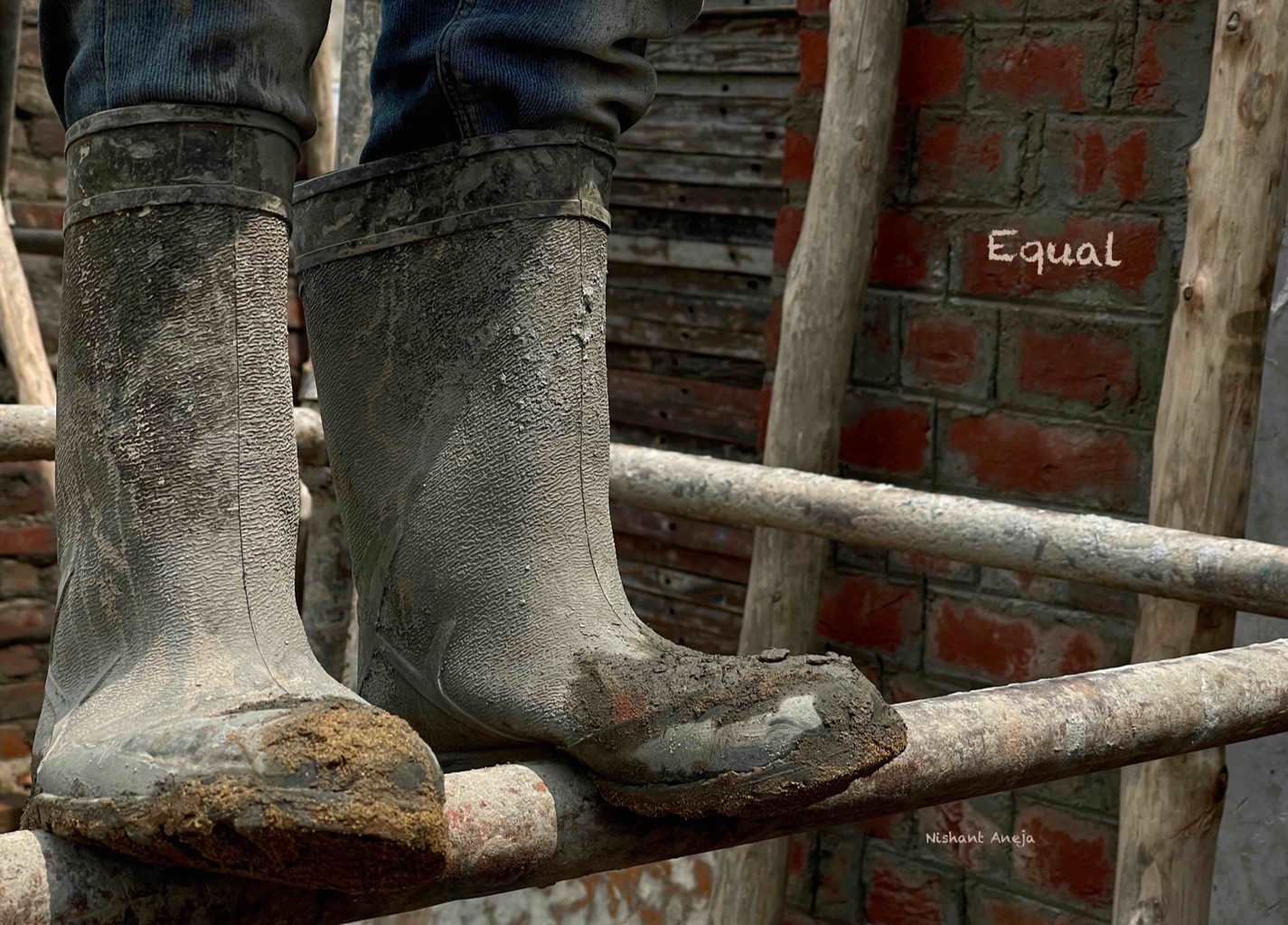
One of my father’s favorite sayings was, “You can never know a man until you’ve walked a mile in his shoes.” When I was growing up, I didn’t think much about that.
Then my family moved north, and I finished school in Ohio.
I remember sitting in history classes learning about slavery, the Civil War, and racism. I felt ashamed because it felt like my family’s Southern roots made us responsible for the ugliest chapter in American history.
That feeling stayed with me long enough that I decided I needed to know more. So I enrolled in a course on Civil War history while in college.
What I discovered surprised me.
The story was more complicated than I had been told. It turns out, the entire nation was entangled in slavery and its consequences. This included churches and the clergy that led them. Even though no one in my family ever owned slaves, I suspect that had more to do with poverty than virtue.
But I also realized something else. My father’s words kept coming back to me: “You can never know a man until you’ve walked a mile in his shoes.”
What’s important?
My father’s generation understood something that many of us have forgotten.
You can learn a great deal about a person by looking at their shoes. But you can’t know a person until you’ve walked a mile in their shoes.
The same is true of societies.
For years, many clergy have repeated a simple observation: if you want to know a person’s priorities, look at their calendar and their checkbook. We may say one thing, but our time and money often reveal what we truly value.
I don’t care much for this observation when it comes to the families I know. For them, their calendars and checkbooks reveal circumstances that are mostly outside of their control. They prioritize survival.
The truth is that most families are working harder than ever and still falling behind. Their calendars are full. Their checkbooks are empty. Their struggle is not laziness. Their struggle is survival.
On the other hand, I think this observation holds true for most nations. Particularly, those, like the U.S., that are wealthy enough to have huge budgets.
The struggle is that human beings have always been tempted to assign greater value to some people than to others. We admire wealth. We seek access to power. We are impressed by status, titles, influence, and success. It’s as though people who have more must somehow matter more.
At the same time, we often look away from those who are struggling or, worse, blame them for their circumstances. The poor. The refugee. The immigrant. The disabled. The elderly. The person working two jobs and still unable to pay the bills. The family choosing between groceries and medication. The child whose future is determined by a zip code they never chose.
And too often, churches have participated in this thinking without realizing it.
Sometimes we speak as though people struggling financially simply need to work harder, make better choices, or show more responsibility. While personal responsibility matters, such explanations often overlook the larger systems that shape people’s lives.
Meanwhile, we live in a time when the government increasingly rewards those who already possess wealth, influence, and access. Resources flow toward the powerful while support for vulnerable people is debated, reduced, or treated as expendable.
A nation’s budget is a moral document. It reveals what a society values and who it values. It reveals whose concerns receive attention, whose voices are heard, and whose suffering is considered acceptable. Our budget tells a story. It reveals what we fear, what we value, and who we believe deserves our attention.
Today, the gap between the rich and the poor is growing even faster. Recently adopted tax policies delivered enormous benefits to those already possessing the greatest wealth, while many working families continue to struggle with rising costs. Some analyses estimate that the wealthiest 1% will receive tax reductions totaling trillions of dollars over the next decade, while middle-income families face increasing economic pressure.
At the same time, the national debt has reached record levels, with annual deficits measured in trillions of dollars.
The question is not simply whether these policies are fiscally wise. They aren’t. The deeper question is moral. What do our priorities reveal about whose shoes matter most?
Congress approved unprecedented levels of spending for immigration enforcement, detention facilities, border security, and military activities while reducing or eliminating funding for many humanitarian, health, refugee, and anti-poverty programs.
Billions of dollars can be found when power is being projected. Compassion is often subjected to a much more rigorous cost-benefit analysis.
This is not merely a political problem. It is a human problem. It is our problem and our challenge to reverse these trends. What a great way to celebrate 250 years. Let’s stop the insanity and get our nation back on track.
The details change from generation to generation, but the temptation remains the same: to value people according to what they possess rather than who they are.
That is why the words found in our Declaration of Independence, “created equal,” continue to challenge us. If all people possess equal worth, then our personal choices, our institutions, our churches, and even our national priorities should reflect that truth.
The question is not whether we believe in equality. The question is whether our lives reveal it.
The struggle we have been describing is not new.
Faith measured by action
Long before the Declaration of Independence. Long before the Civil War. Long before Jesus walked the roads of Galilee. Long before James wrote to the early church. The prophets were already confronting societies that measured human worth by wealth, status, and power.
Again and again, the prophets spoke with a common voice. Pay attention to the widow. Pay attention to the orphan. Pay attention to the immigrant. Pay attention to the poor.
In nearly every generation, these were the people standing outside the circle of power. They had no army to defend them. No wealth to protect them. No political influence to advance their interests. They were often left standing while others were invited to sit.
If God shows any preference at all, it is toward those whom everyone else overlooks.
The prophet Amos was one of the clearest voices in this tradition. Amos was not a king, priest, or member of the elite. He was a shepherd and a farmer. In today’s language, he wore work boots, not polished dress shoes.
And Amos was not impressed by wealth.
He watched powerful people grow richer while the poor struggled to survive. He saw worship services filled with songs and sacrifices while justice was nowhere to be found. Speaking for God, Amos declared: “Let justice flow like a stream, and righteousness like a river that never goes dry.” (Amos 5:24)
For Amos, faith was never measured by what people claimed to believe. Faith was measured by how people treated one another.
Jesus continued this prophetic tradition. He touched lepers. He welcomed children. He spoke with Samaritans. He ate with sinners. He announced good news to the poor.
Again and again, Jesus crossed boundaries that others considered untouchable. He saw people whom society had learned not to see.
Which brings us to James.
Many scholars believe James was the brother of Jesus and a leader in the church at Jerusalem. His letter is among the most practical books in the New Testament. James is less interested in what Christians say they believe than in whether their lives reflect those beliefs.
The early church proclaimed that every person mattered to God. Yet even the early church struggled to live up to that conviction.
People still judged one another by appearances. They still made assumptions based on wealth and status. They still looked at the shoes before they looked at the soul.
So James writes: “My friends, as believers in our glorious Lord Jesus Christ, don’t show favoritism.” (James 2:1)
Then he describes a scene that feels surprisingly familiar. A wealthy person enters the gathering wearing fine clothes. A poor person enters wearing old clothes. The wealthy person is offered the best seat. The poor person is told to stand in the back or sit on the floor.
The details may have changed, but the temptation remains. We still judge people by what they wear. By where they live. By what they earn. By the language they speak. By the color of their skin. By whom they love. By gender. By the nation they call home.
In other words, by whether we think they are useful to us.
James is relentless. He refuses to let the church hide behind good intentions. If we claim that all people possess equal worth before God, then our actions must reflect that truth.
The question is not whether we believe people are equal. The question is how we treat them when they walk through the door.
Imagine we’re all equal
Love your neighbor as you love yourself. But if you treat people according to their outward appearance, you are guilty of sin…
James 2:1–9
The authors of the Declaration of Independence proclaimed that all people are created equal. Yet they lived in a society that treated many people as less than equal. The contradiction was obvious then, and it remains obvious now.
In our companion book, Walter Isaacson reminds us that the Declaration’s most famous sentence became powerful precisely because it was larger than the people who wrote it. Generation after generation has returned to those words and asked whether we truly believe them.
The history of the United States can, in many ways, be understood as an argument over a single proposition: What does it mean to say that all people are created equal?
In order to explore this idea further, I’d like to take you all on a short excursion. It won’t take long, but I think it’ll be worth it.
The scene is a dedication. The dedication is a cemetery in Gettysburg that is now the final resting place for thousands of soldiers who fought there. It’s November, so the air is cold. You can’t help but notice that the ground beneath your feet is still scarred from one of the bloodiest battles in American history.
Just four months earlier, more than 50,000 soldiers had been killed, wounded, or gone missing on these fields surrounding Gettysburg. Everywhere you look, there are reminders of grief. Fresh graves. Mourning families. Empty places where sons, fathers, brothers, and friends once stood.
The nation itself seems uncertain. The Civil War has already taken hundreds of thousands of lives. Some wonder whether the Union can survive. Others wonder whether the ideals upon which the nation was founded were ever true to begin with.
Although he is in attendance, the featured speaker for the day is not the President. The crowd has gathered to hear Edward Everett, one of the most respected orators in America. He speaks for more than two hours. You’re tired of listening by the time President Abraham Lincoln rises to offer what many hope and assume will be a few brief remarks.
And he didn’t disappoint. He was quite brief. However, in just a couple of minutes, Lincoln reframes the war’s entire meaning.
Lincoln didn’t begin with armies, politics, or states’ rights; he began with an idea.”
Four score and seven years ago our fathers brought forth on this continent, a new nation, conceived in Liberty, and dedicated to the proposition that all men are created equal.Now we are engaged in a great civil war, testing whether that nation, or any nation so conceived and so dedicated, can long endure. We are met on a great battle-field of that war. We have come to dedicate a portion of that field, as a final resting place for those who here gave their lives that that nation might live. It is altogether fitting and proper that we should do this.But, in a larger sense, we can not dedicate — we can not consecrate — we can not hallow — this ground. The brave men, living and dead, who struggled here, have consecrated it, far above our poor power to add or detract. The world will little note, nor long remember what we say here, but it can never forget what they did here. It is for us the living, rather, to be dedicated here to the unfinished work which they who fought here have thus far so nobly advanced.It is rather for us to be here dedicated to the great task remaining before us — that from these honored dead we take increased devotion to that cause for which they gave the last full measure of devotion — that we here highly resolve that these dead shall not have died in vain — that this nation, under God, shall have a new birth of freedom — and that government of the people, by the people, for the people, shall not perish from the earth.
Lincoln reaches back to the Declaration of Independence and lifts up a truth larger than the men who wrote it. The nation had never fully lived up to those words. He realized that the authors themselves struggled to live up to them. Yet Lincoln refuses to abandon the ideal because people have failed to achieve it. Instead, he argues that the Civil War is testing whether a nation dedicated to equality can endure.
Standing among the graves, listening to the President speak, you begin to realize that equality is not merely a political slogan. Equality is a moral claim about human worth. The question before the nation is whether those words will remain ink on a page or become a reality for the people God created.
Lincoln stood on a battlefield surrounded by death and dared to imagine a nation that might yet become what it claimed to be from the beginning. He is looking beyond the present reality toward a future possibility.
The reality is that our Declaration of Independence contains both a soaring truth and a profound contradiction. The men who wrote, approved, and celebrated the sentence “all men are created equal” lived in a society that denied equality to enslaved people, women, Indigenous peoples, and many others. The reality is, if we look at the results that followed, you might conclude that the reference was only to land-owning white males.
The paradox is not hidden. In fact, the paradox is embedded in the nation’s founding.
What makes the story interesting is that the Declaration’s authors did not fully resolve the contradiction. In some ways, they couldn’t. The compromise they left behind became a moral debt passed to future generations. A debt that you and I, our children, and our children’s children still owe.
And it is a debt that many powerful people would rather default on.
Now, try to imagine a community where no one has to prove their worth before being treated with dignity. Imagine a church where wealth, race, education, politics, nationality, and status do not determine a person’s value.
Imagine a nation that measured greatness not by who has power but by whether every person is treated as bearing the image of God.
What’s next?
The challenge before us is not new.
For generations, prophets, apostles, pastors, teachers, and ordinary people of faith have called us toward a simple truth: every person possesses God-given worth.
Not because of what they earn. Not because of where they were born. Not because of the color of their skin. Not because of their citizenship, education, influence, gender, sexual orientation, or status.
But because they were created in the image of God.
The unfinished work Lincoln described at Gettysburg is not only America’s work. It is the Church’s work. It is our work.
This week, I invite you to take two simple steps. First, pay attention to the people society often overlooks. The poor. The immigrant. The elderly. The disabled. The lonely. The person whose shoes tell a story different from your own.
Second, ask yourself a difficult question: What do my priorities reveal about whose shoes matter most?
James reminds us that faith is not measured only by what we believe. Faith is measured by how we treat people when they walk through the door.
So let’s keep moving toward the world God imagines. A world where no one has to prove their worth to be treated with dignity. A world where we stop looking at shoes and start seeing souls. A world where “created equal” is more than an idea. A world where it becomes a reality.
The question is not whether we believe people are equal. The question is whether we’re willing to walk a mile in their shoes.
The prophets pointed the way. Jesus walked the road. James challenged the church to keep moving. Lincoln called it the unfinished work. Two hundred and fifty years later, the journey continues.
Keep walking.
You can join us each Sunday in person or online by clicking the button on our website’s homepage. Click here to watch. This button takes you to our YouTube channel. You can find more information about us on our website at FlintAsburyChurch.org.
This article is part of a weekly newsletter called the Circuit Rider. You can request this publication by email by sending a request to FlintAsburyUMC@gmail.com, or let us know when you send a message through our website. We post an archive of past editions on our website under Connect – choose Newsletters.
Pastor Tommy
The series concept and some content come from Walter Isaacson. The Greatest Sentence Ever Written. NY: Simon & Schuster, 2025.