
As Father’s Day approaches, I can’t help but think about my own father.
I admired many things about him. He worked hard. He was humble. He treated people with respect. He believed a person’s character mattered more than their status. Looking back, I realize much of what he taught me about life came not from what he said, but from how he lived.
My father’s faith was practical. I never heard him quote scripture. I never heard him discuss theology. Yet he often repeated sayings that sounded a lot like the wisdom found in Proverbs.
Last week, I shared one of his favorites, “You can’t know a man until you’ve walked a mile in his shoes.”
At the time, I thought he was simply encouraging empathy. Years later, I realized he was teaching something much deeper. Before we judge another person, we should try to understand their story. Before we dismiss someone, we should remember that we rarely know the burdens they carry.
It is a lesson our world badly needs.
This Sunday, as we continue our Truth series with a message titled Dignity, I find myself grateful for fathers and father figures who taught us, not only with words, but also by the example of their lives.
Over the past few months, I’ve been intrigued by what I’ve read about and heard from Senator and pastor Raphael Warnock. Senator Warnock often speaks about his father.
His father was a veteran, a pastor, and a hardworking man who spent years repairing and restoring automobiles. He was not wealthy or influential by society’s standards, but he taught his children lessons about character, responsibility, and respect for others.
Good fathers teach dignity.
Not necessarily through sermons or lectures. They teach it by how they treat people. They teach it by showing respect to those with less power than they have. They teach it by whether they recognize the worth of every person they encounter.
Many of us learned those lessons from our parents, grandparents, teachers, coaches, and pastors. The question is whether our society is still teaching them.
Warnock has argued that America is experiencing a spiritual crisis. I believe he is right.
In a recent interview, Warnock posed a question: “Do our deeds match our creeds?” It is a simple question, but an important one. And it keeps coming up.
Many people, especially younger generations, have become skeptical of organized religion. There are many reasons for that decline, but one is difficult to ignore. People notice when our deeds do not match our creeds.
Warnock suggested that the true test of faith is found in our commitment to those with the least power and the fewest resources. The prophets asked that question. Jesus asked that question. The church has been wrestling with that question ever since.
It is also a question worth asking of ourselves.
A spiritual crisis does not necessarily mean fewer people believe in God. America remains a deeply religious nation. Politicians quote scripture. Churches remain active. Public officials regularly invoke God’s blessing.
The crisis runs deeper. We are becoming less capable of recognizing the dignity of one another. The evidence is all around us. It is as though our focus has become distorted. We see labels more clearly than people. We revert to categories before we discover stories.
We hear it in the language that dominates public life. Entire groups of people are described as threats before they are recognized as human beings. Immigrants are discussed as problems to solve. Members of the LGBTQ+ community are too often reduced to issues to be debated rather than neighbors to be known. Political opponents are treated as enemies rather than fellow citizens. The poor are often blamed for their circumstances while wealth itself is celebrated as evidence of virtue.
We see it when fear becomes more persuasive than compassion. We see it when outrage attracts more attention than understanding. We see it when public policy increasingly asks, “How do we protect ourselves from them?” instead of, “How do we care for one another?”
We see it whenever a person’s race, nationality, religion, gender, sexual orientation, or economic status becomes more important than their humanity.
This is how prejudice works. This is how discrimination works. This is how societies become divided.
The process always begins the same way.
People notice when our deeds do not match our creeds. They notice when faith is used to judge rather than to heal. They notice when some groups are welcomed while others are treated with suspicion. They notice when public expressions of religion are accompanied by rhetoric that portrays entire groups of people as threats rather than neighbors.
These attitudes are not just words. They have shaped policy. And they have ushered in a spiritual crisis. They have determined who receives protection, who receives assistance, whose voices are heard, and whose suffering is ignored.
The result is not merely political division. It is a loss of dignity.
We have become less curious about one another’s stories. Less willing to listen. Less capable of empathy. More likely to define people by labels than by their humanity.
Senator Warnock is not the only prophetic vo ice raising these concerns. Others, including Pope Leo, have repeatedly warned against cultures of exclusion, indifference, and fear. Though they speak from different contexts, their concern is remarkably similar.
A society cannot remain healthy when some people are treated as though they matter less than others. This is why I believe we are facing a spiritual crisis. The process always begins the same way.
We stop seeing people.
I see that you are very religious in every way. For as I walked through your city and looked at the places where you worship, I found an altar on which is written, “To an Unknown God.”
Acts 17:22–28
The truth is, this is not a new problem.
Nearly two thousand years ago, the Apostle Paul arrived in Athens, one of the great intellectual and religious centers of the ancient world. Everywhere he looked, he found temples, shrines, and altars dedicated to various gods. The city was deeply spiritual, but not in the way Paul understood faith.
Based on our earlier observations, most of us expect that Paul would begin with criticism. Instead, he begins with curiosity.
Standing before the people of Athens, Paul says: “I see that in every way you are very religious. For as I walked through your city and looked at the places where you worship, I found an altar on which is written, ‘To an Unknown God'” (Acts 17:22-23).
Paul disagreed with much of what he saw in Athens. Yet before he challenged their beliefs, he recognized their humanity. Before he spoke, he listened. Before he condemned, he observed.
Paul saw people.
That approach did not begin with Paul. Centuries earlier, the prophets challenged those who claimed to worship God while neglecting justice and compassion. Through the prophet Isaiah, God declared: “Learn to do right. Seek justice. Defend the oppressed. Help the orphans. Stand up for the rights of widows.” (Isaiah 1:17)
The prophet Micah summarized God’s desire even more simply: “Do what is right, love mercy, and walk humbly with your God.” (Micah 6:8)
Jesus continued that same tradition. When others saw sinners, Jesus saw people. When others saw outcasts, Jesus saw people. When others saw enemies, Jesus taught his followers to love them.
Again and again, Jesus refused to reduce human beings to labels.
That is why Paul’s speech in Athens eventually arrives at one of the most important truths in scripture: “From one person God created all human beings and made them live over the whole earth.” (Acts 17:26)
Paul reminds us that our identity is not found in our nationality, race, politics, wealth, religion, gender, or social status. Rather, “It is through Jesus that we live and function and have our identity” (Acts 17:28). Our identity begins with God because every person shares the same Creator and bears the image of God. Every person possesses dignity.
Dignity is not something we earn. It is something we recognize.
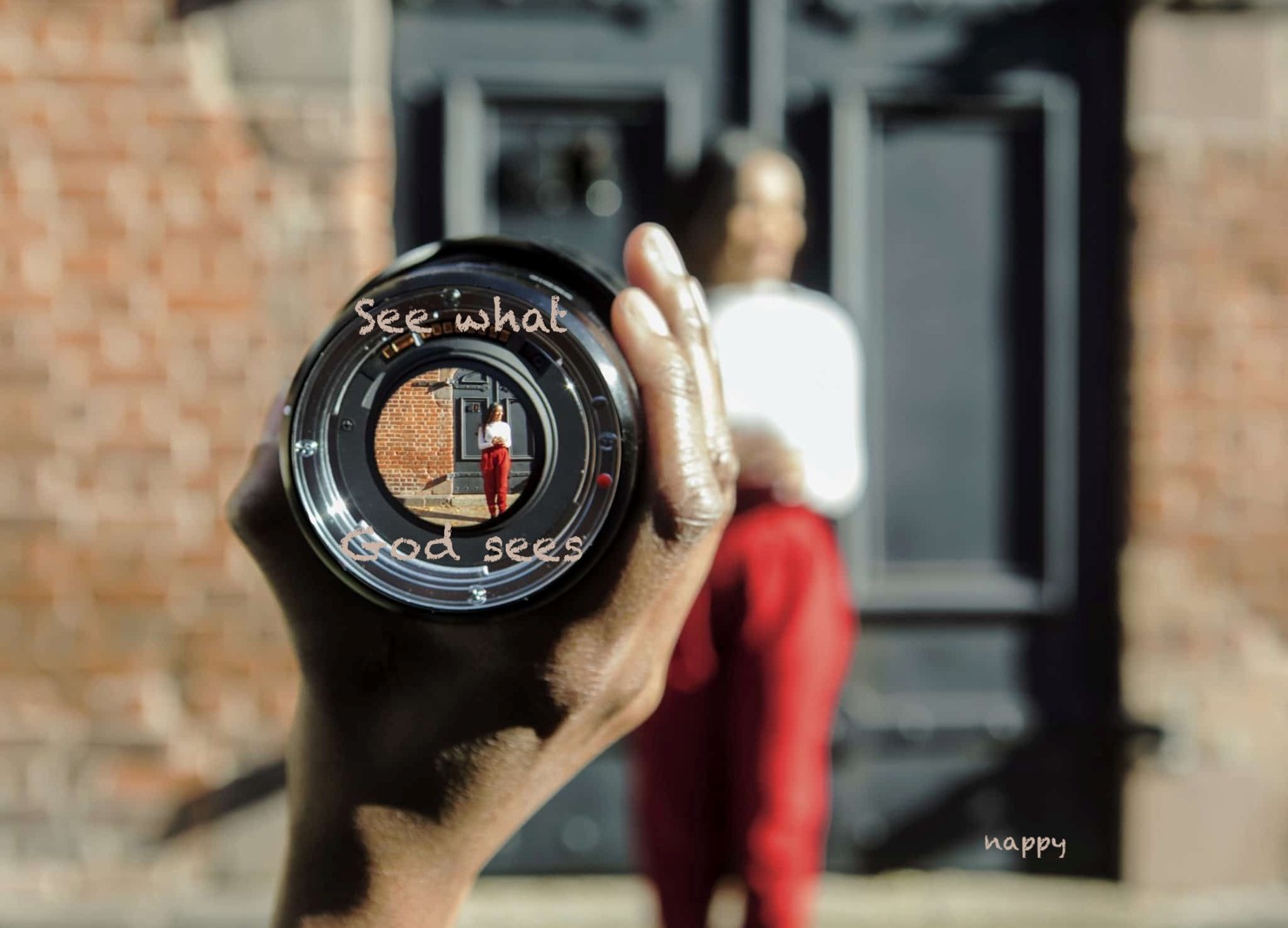
Perhaps that is why dignity begins with seeing. Paul invites us to sharpen our focus—not on labels, but on the people God created and loves. To see what God sees is to recognize the dignity already present in every person.
This week’s companion reading is one of the most interesting chapters in Walter Isaacson’s The Greatest Sentence Ever Written. The chapter is titled “Endowed by Their Creator.”
Many Americans assume the founders shared a common Christian faith. Isaacson points out that reality was far more complicated. Some were deeply religious. Others were skeptical of traditional doctrine. Many disagreed sharply with one another about theology.
Yet they found common ground on one revolutionary idea: Human dignity does not come from government. Nor does it come from wealth. Dignity does not come from social status. It does not come from race, nationality, or family heritage.
Dignity comes from something deeper.
That conviction found its way into the Declaration of Independence: “All men are created equal” and are “endowed by their Creator with certain unalienable Rights.”
The founders often failed to live up to those words. The existence of slavery is painful evidence of that failure. Women were excluded from political participation. Native peoples were frequently denied their humanity. The contradiction was obvious.
Yet the ideal endured.
Generation after generation, Americans returned to those words to challenge slavery, segregation, discrimination, and exclusion. Why? Because the Declaration pointed beyond government to something larger.
Long before Jefferson put pen to paper, Paul stood in Athens and proclaimed: “From one person God created all human beings and made them live over the whole earth.” The source of dignity was never government.
The source of dignity was God.
The founders did not fully realize that vision. Neither have we. But the vision itself remains worth pursuing. A healthy society is not built upon fear of those who are different. It is built upon the recognition that every person possesses dignity that cannot be earned, purchased, granted, or taken away.
If our spiritual crisis begins when we stop seeing people, then healing begins when we learn to see them again. Perhaps that sounds simple. But in practice, it may be one of the hardest things we are called to do.
The challenge before us is surprisingly simple: sharpen your focus. See what God sees.
It requires us to look beyond labels. Beyond political parties. Beyond race and nationality. Beyond religion. Beyond gender and sexual orientation. Beyond wealth and social status.
It requires us to remember that every person we meet has a story, a struggle, and a dignity that comes from God. My father understood that. Raphael Warnock’s father understood that. The prophets understood that. Jesus embodied that. Paul proclaimed it in Athens.
The founders attempted to write it into the very fabric of our nation. The challenge now belongs to us. Will we define people by categories? Or will we recognize the image of God within them?
Will our deeds match our creeds? Will we continue contributing to a culture of fear and exclusion? Or will we help build a culture of dignity?
The future of our communities, our churches, and our democracy may depend on how we answer those questions.
You can join us each Sunday in person or online by clicking the button on our website’s homepage. Click here to watch. This button takes you to our YouTube channel. You can find more information about us on our website at FlintAsburyChurch.org.
This article is part of a weekly newsletter called the Circuit Rider. You can request this publication by email by sending a request to FlintAsburyUMC@gmail.com, or let us know when you send a message through our website. We post an archive of past editions on our website under Connect – choose Newsletters.
Pastor Tommy
The series concept and some content come from Walter Isaacson. The Greatest Sentence Ever Written. NY: Simon & Schuster, 2025.