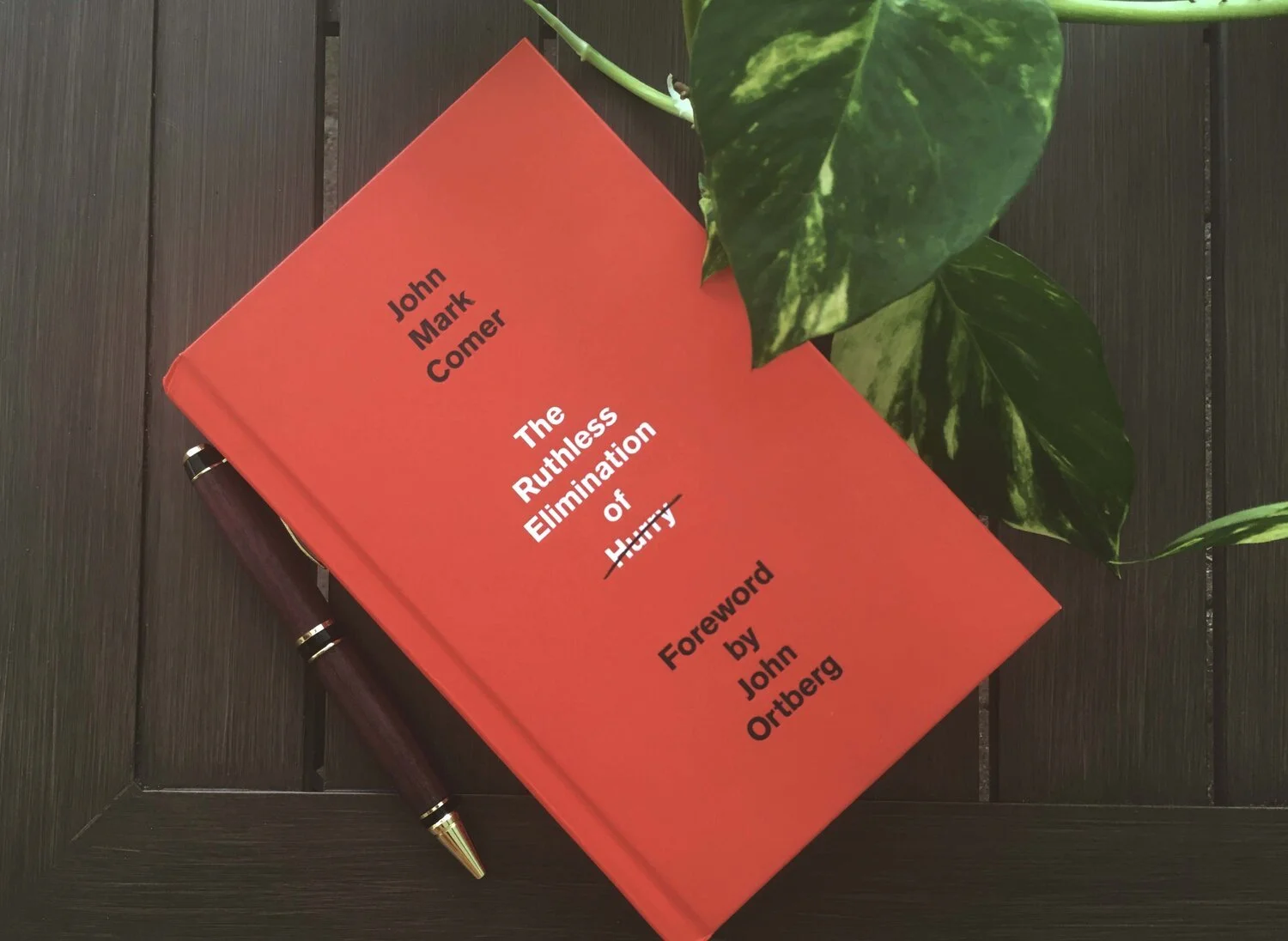
Beginning with Easter, we start a new series, *Pace,* accompanied by a book that helps us pace ourselves in a world that won’t. Given the theme of our series, don’t read this book if it causes you to hurry more than you already are. That’s the point.
If you pay attention to the pace of life around us, it often feels like everything is speeding up. News travels instantly. Messages arrive constantly. Work and responsibilities spill into evenings and weekends. Even our leisure time can feel hurried, as if we are trying to squeeze one more experience into a schedule already too full.
Many of us sense that something about this pace is unhealthy. We feel distracted more often than attentive. We feel rushed even when we are doing things we care about. And we sometimes find ourselves reacting quickly to the world around us rather than responding thoughtfully.
In other words, many of us are running, rather than walking.
The problem, of course, is that life was never meant to be lived at a sprint. Human beings were created for rhythms of work and rest, attention and reflection, engagement and renewal. Yet modern culture seems determined to push us faster and faster.
That is why our next book club selection may feel especially timely.
Our companion book for our new series is The Ruthless Elimination of Hurry, written by pastor and teacher John Mark Comer. The book takes a close look at the pressures of modern life and asks an uncomfortable but important question: What is hurry doing to our souls?
Comer begins with a striking observation that has resonated with many readers. Borrowing from the spiritual writer Dallas Willard, he notes that hurry may be the greatest enemy of spiritual life in our time. Not because we are doing bad things, but because we are doing too many things too quickly. When life moves at a relentless pace, it becomes difficult to pay attention to God, to other people, or even to our own inner lives.
If you have ever found yourself distracted during prayer, impatient with people you care about, or exhausted by the constant flow of information, you may already understand what Comer is describing.
But the book is not simply a critique of modern life. Its deeper purpose is to explore how followers of Jesus might live differently.
Comer suggests that the life of Jesus offers a striking contrast to the hurried pace we experience today. In the Gospels, Jesus strolls through villages and along dusty roads at walking speed. He stops for conversations. He notices people others overlook. He withdraws regularly for prayer. And even when crowds gather around him with urgent needs, he refuses to be driven by the same frantic urgency that shapes so much of our world.
In other words, the life of Jesus moves at a different pace.
Comer invites readers to consider what it might look like to arrange our lives around that same rhythm. Drawing on both ancient Christian practices and modern insights about attention and distraction, he describes several habits that help people slow down and rediscover a deeper way of living. These practices include silence, Sabbath rest, simplicity, and intentional community—practices that have been part of Christian spirituality for centuries but are often neglected in the busyness of contemporary life.
What makes the book especially helpful is its practical tone. Comer is not writing as someone who has escaped the pressures of modern life. Instead, he writes as someone who has experienced those pressures personally and has been learning how to resist them. The result is a book that is both thoughtful and accessible, inviting readers to reflect honestly about their own lives.
John Mark Comer himself is part of a younger generation of Christian leaders who are thinking carefully about how faith is lived in a fast-moving, technologically saturated world. After many years serving as a pastor in Portland, Oregon, he now teaches and writes about spiritual formation—the process by which people gradually become more like Christ through the patterns and practices of everyday life.
His work resonates with many readers because it connects ancient Christian wisdom with the realities of modern experience. Rather than offering quick fixes or simplistic advice, Comer encourages readers to step back and ask deeper questions about the structure and pace of their lives.
Those questions are particularly meaningful for people of faith. Christians believe that following Jesus involves more than adopting certain beliefs. It also involves learning a way of life—a way that shapes how we use our time, how we treat other people, and how we pay attention to the presence of God.
Over eight weeks, we’ll explore these ideas together. Each week, we will read a portion of the book, which will be reinforced in our Sunday teaching. The goal is not simply to finish the book, but to begin noticing how hurry influences our daily lives and to consider how the teachings and practices of Jesus might offer a healthier rhythm.
You do not need to read the entire book before joining the conversation. We will move through it gradually, one section at a time. Whether you have time to read every page or simply want to listen and share your thoughts, you are welcome.
In a culture that constantly urges us to move faster, taking time to read, reflect, and talk together may feel almost countercultural. But that may be exactly what makes the experience worthwhile.
After all, if the life of Jesus teaches us anything, it is that the most important things in life rarely happen at running speed.
Some of you may also be participating in the book study, starting after Easter, that explores our Methodist heritage through Knowing Who We Are. That study looks back at the theological foundations of the United Methodist tradition and how John Wesley and the early Methodists organized their lives around practices that helped people grow in faith.
Our reading of The Ruthless Elimination of Hurry approaches this same concern from a different perspective. While the Wesleyan study examines the history and theology of those practices, Comer’s book reflects on how similar rhythms can help us manage the pressures of modern life.
For those who choose to take part in both discussions, the two books will complement each other—one helping us understand where our traditions originate, and the other encouraging us to consider how those traditions might influence the pace and patterns of our lives today.
Here is a suggested reading schedule:
| Sundays | Chapters | Themes |
|---|---|---|
| April 5 | Prologue – Chapter 1 | Enemy of Spiritual Life |
| April 12 | Chapter 2 | Enemy of Love |
| April 19 | Chapter 3 | Hurry & Emotional Health |
| April 26 | Chapter 4 | Hurry & Attention |
| May 3 | Chapter 5 | Silence & Solitude |
| May 10 | Chapter 6 | Sabbath |
| May 17 | Chapters 7 and 8 | Simplicity |
| May 24 | Chapter 9 and Epilogue | Slowing |
We’ll have a few books available for purchase at $12 each. Additional copies of the hardcover edition are available through Amazon for $13, with a few used copies at slightly lower prices. The paperback edition is more expensive. This book may also be available at the local library.
Our Book Club does not meet as a group. However, our weekly messages reference that week’s chapters or themes. You can anticipate spoiler alerts unless you keep up with the pace. You can purchase your own copy or visit your local library.
You can contact our office with questions by phone or simply type your question or enter a prayer request on our website’s homepage — FlintAsburyChurch.org.
Pastor Tommy
John Mark Comer. The Ruthless Elimination of Hurry. Colorado Springs : WaterBrook, 2019. ISBN 9780525653097.